
No products in the cart.
What is the US law for Email Marketing?
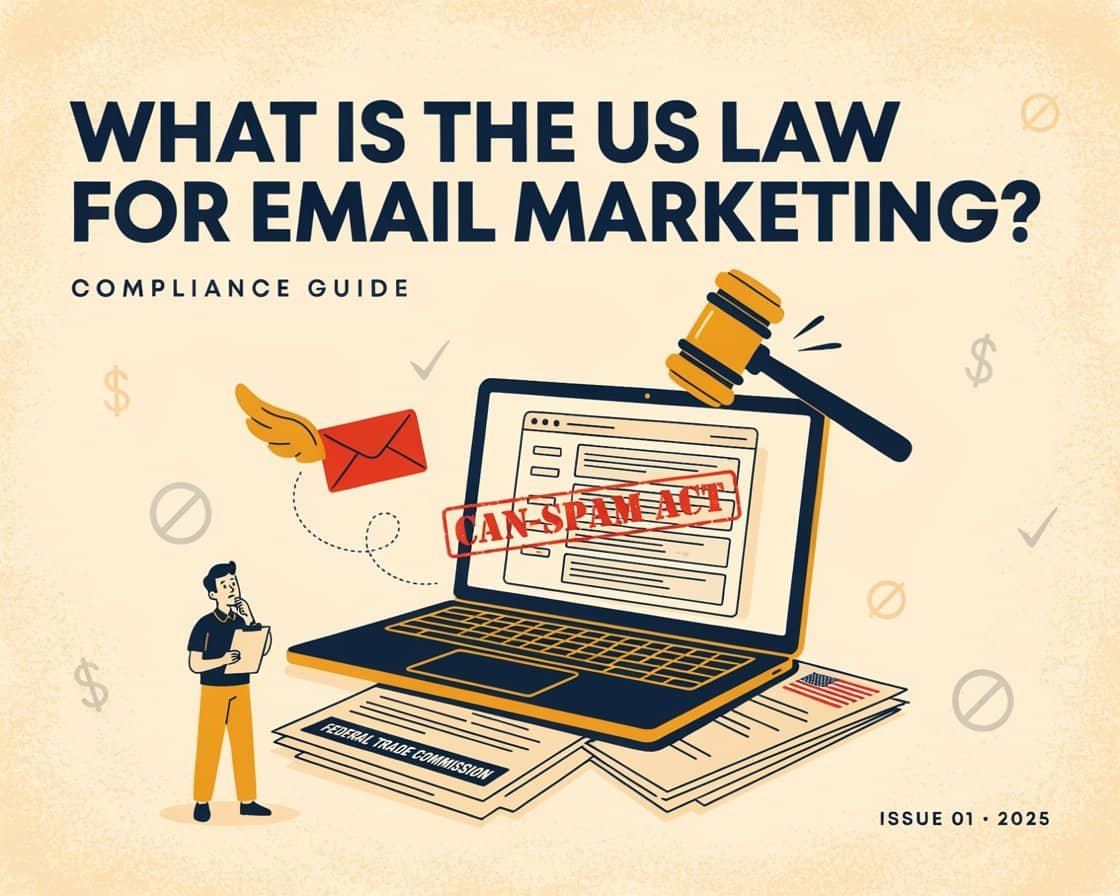
Email marketing is one of the best ways to reach new prospects and stay connected with existing customers. It lets businesses share updates, promote products, and build long-term relationships. However, sending marketing emails is not just about writing a good offer. You also need to follow the laws that protect people’s privacy and give them control over the emails they receive.
In the United States, several email marketing laws explain what businesses can and cannot do. Following these rules helps you avoid fines, protect your brand’s reputation, and build trust with your audience. The most important law is the CAN-SPAM Act, which applies to most commercial email campaigns. Depending on the type of business you run and the personal data you collect, other regulations such as GDPR, HIPAA, and CCPA may also apply. Understanding these laws is easier than it sounds, and once you know the basics, you can send email campaigns with more confidence while staying compliant.
The CAN-SPAM Act: The Backbone of US Email Law
The CAN-SPAM Act of 2003 is the primary federal law that regulates commercial email in the United States. It applies to businesses of all sizes, whether you’re sending newsletters, promotional offers, product announcements, or sales emails. The goal of the law is simple: prevent deceptive email practices and give people an easy way to stop receiving marketing messages if they choose.
Following the CAN-SPAM Act is not difficult. In fact, most of the requirements are common-sense practices that also help improve your brand’s reputation and email deliverability. Here are the five main rules every business should know.
1. No false or misleading information
Your email should clearly show who it is from. The “From,” “To,” “Reply-To,” and routing information must accurately identify your business or the person sending the message. You should also avoid misleading subject lines that promise something the email doesn’t actually deliver.
For example, a subject line saying “Your Invoice Is Ready” when the email is actually a sales promotion could violate the law. Instead, write subject lines that honestly describe the content of your message. Clear and truthful emails build trust and are more likely to receive positive engagement over time.
2. Clearly identify commercial emails
If your email is promoting a product, service, or business, recipients should be able to recognize that it is a commercial message. The law does not require large warning labels, but your email should not try to disguise itself as a personal or official message.
A simple statement such as “This email contains promotional information from [Your Company]” is usually enough to make your intentions clear. Being transparent helps create a better experience for your audience and reduces complaints.
3. Include a clear and easy unsubscribe option
Every marketing email must contain a simple way for recipients to stop receiving future emails. Most businesses include an “Unsubscribe” link in the footer of every campaign.
The process should be quick and easy. People should not have to log into an account, answer multiple questions, or complete unnecessary steps just to unsubscribe. Once someone requests to opt out, businesses are required to honor that request within the time allowed by the law and stop sending them marketing emails.
4. Include your valid physical business address
Every commercial email must include a legitimate physical postal address. This can be your company’s office address, headquarters, or an approved registered mailbox if appropriate.
Adding your address shows recipients that your business is real and accountable. It also helps increase credibility and is a standard practice used by reputable email marketers around the world.
5. You remain responsible for emails sent on your behalf
Many businesses hire marketing agencies or use email service providers to manage campaigns. While these partners may handle the technical work, the legal responsibility does not disappear.
If a third-party agency sends non-compliant emails using your brand, your business can still be held responsible. Before working with any provider, make sure they follow email marketing best practices, maintain clean mailing lists, and understand compliance requirements. Choosing reliable partners helps protect both your reputation and your business.
GDPR: The European Standard That Still Applies to US Businesses
The General Data Protection Regulation (GDPR) is a privacy law created by the European Union. Even though it is an EU law, it can still apply to businesses in the United States and other countries. If you collect personal information from people living in the EU or send marketing emails to them, you may need to follow GDPR requirements, regardless of where your business is based.
GDPR focuses on giving people more control over their personal information. It requires businesses to be open about how they collect, store, and use customer data. Here are the main rules every email marketer should understand.
1. Get clear consent before sending marketing emails
Under GDPR, you cannot simply add someone to your marketing list because they visited your website or bought a product. In most cases, you need their clear and explicit permission before sending promotional emails.
Consent should be freely given, specific, and easy to understand. Pre-checked boxes or hidden consent statements are generally not acceptable. Many businesses also use a double opt-in process, where a subscriber confirms their email address by clicking a link in a confirmation email. This provides stronger proof that the person genuinely wanted to join your mailing list.
2. Protect personal data
Businesses must take reasonable steps to keep personal information safe from unauthorized access, loss, or misuse. This includes email addresses, names, phone numbers, and any other information that can identify an individual.
You should also clearly explain what data you collect, why you collect it, and how it will be used. This information is usually provided in your website’s privacy policy. Being transparent helps build trust and shows that your business respects customer privacy.
3. Respect the right to access and delete data
GDPR gives individuals the right to know what personal information a business has about them. If someone asks for a copy of their data, you should be able to provide it.
People also have the “right to be forgotten,” which means they can request that their personal information be deleted when there is no valid reason to keep it. Your systems should make it easy to locate, update, or remove customer data when these requests are made.
HIPAA: Protecting Health Information
The Health Insurance Portability and Accountability Act (HIPAA) is a US law that protects sensitive patient health information. It mainly applies to healthcare providers, health plans, healthcare clearinghouses, and businesses that work with them. If your email marketing or communication involves Protected Health Information (PHI), HIPAA compliance is essential.
Unlike general marketing laws, HIPAA focuses on keeping patient information private and secure. Even an accidental disclosure of medical information can lead to serious legal and financial consequences. Here are the key requirements to understand.
1. Business Associate Agreements (BAAs)
If your company provides email marketing, software, cloud storage, or other services to a healthcare organization and may access PHI, you may need to sign a Business Associate Agreement (BAA).
A BAA is a legal contract that explains how protected health information will be handled, stored, shared, and secured. It also outlines the responsibilities of both parties if a data breach or security issue occurs.
2. Encrypt protected health information
Any email containing Protected Health Information (PHI) should be properly encrypted. Encryption converts the information into a secure format that cannot be read without the correct authorization.
Using encrypted email helps prevent unauthorized access if an email is intercepted during transmission. Many healthcare organizations use secure email platforms specifically designed to meet HIPAA security requirements.
3. Follow the “minimum necessary” rule
One of the core principles of HIPAA is using only the minimum amount of information necessary to complete a task.
For example, if an employee only needs a patient’s appointment date, they should not receive the patient’s full medical history. Limiting access to only the information required reduces privacy risks and helps maintain compliance.
CCPA: California’s Consumer Privacy Law
The California Consumer Privacy Act (CCPA) is a privacy law that gives California residents greater control over their personal information. It applies to many businesses that collect personal data from California consumers and meet certain legal thresholds.
Although it is a state law, many businesses across the United States choose to follow CCPA principles because they improve transparency and customer trust.
1. Give consumers control over their personal information
Under CCPA, California residents have the right to know what personal information a business collects about them. They can also request a copy of that information and ask for it to be deleted, with some legal exceptions.
Businesses should have a simple process for receiving and responding to these requests within the required time period.
2. Be transparent about your data practices
Companies must clearly explain what personal information they collect, why they collect it, and how it is used or shared.
This information is usually provided in a clear and easy-to-read privacy policy. Being open about your data practices helps customers understand how their information is handled and builds confidence in your business.
3. Allow consumers to opt out
If your business sells or shares personal information in ways covered by CCPA, consumers must have an easy way to opt out.
Many businesses include a “Do Not Sell or Share My Personal Information” link on their website, along with other privacy controls. Providing simple privacy choices shows respect for customer preferences and helps maintain compliance.

Staying on Top of Changing Email Marketing Laws
Email marketing laws continue to evolve as technology, privacy expectations, and data collection practices change. Over the past few years, several US states have introduced new privacy laws, while existing regulations such as GDPR and CCPA have also received updates. Because of this, businesses should review their email marketing practices regularly instead of assuming that old compliance rules are still enough.
The good news is that staying informed doesn’t have to be difficult. Following trusted marketing publications, privacy law updates, or legal newsletters can help you learn about important changes before they affect your campaigns. It’s also a good idea to review your privacy policy, consent forms, and email marketing processes at least once a year to make sure they still meet current requirements.
The more proactive you are, the easier it is to protect your business, maintain customer trust, and avoid unnecessary compliance issues.
FAQs about the US Law for Email Marketing
Do I need to follow GDPR if my business is only in the US?
Yes, in many cases. GDPR applies based on where the person receiving your emails is located, not where your business operates. If you collect personal data from people living in the European Union or send them marketing emails, GDPR may apply even if your company is entirely based in the United States.
Is double opt-in required under the CAN-SPAM Act?
No. The CAN-SPAM Act does not require businesses to use a double opt-in before sending commercial emails.
However, many companies still choose to use double opt-in because it verifies that subscribers genuinely want to receive emails. It also helps reduce fake signups, improves email list quality, lowers spam complaints, and supports compliance with stricter privacy laws like GDPR.
What happens if I don’t comply with email marketing laws?
The consequences depend on which law applies and how serious the violation is. Businesses may face financial penalties, legal action, investigations, or damage to their reputation.
Some laws can treat each non-compliant email as a separate violation, which means fines can increase quickly if large campaigns fail to meet legal requirements. Beyond penalties, non-compliance can also hurt your sender reputation, reduce email deliverability, and cause customers to lose trust in your business.
Bottom Line
Understanding email marketing laws is about much more than avoiding fines. Laws such as the CAN-SPAM Act, GDPR, HIPAA, and CCPA are designed to protect consumers and encourage responsible marketing practices.
The best approach is simple: collect permission before sending marketing emails when required, be honest about who you are, clearly explain how you use personal data, include an easy unsubscribe option, and protect customer information with appropriate security measures. Following these principles helps you stay compliant while building stronger relationships with your subscribers.
Disclaimer:
This article is provided for general educational purposes only and should not be considered legal advice. Email marketing and privacy laws vary by country, state, and industry, and they can change over time. If you have questions about your legal obligations, consult a qualified attorney or privacy professional who can advise you based on your specific business and circumstances.


2 Comments