No products in the cart.
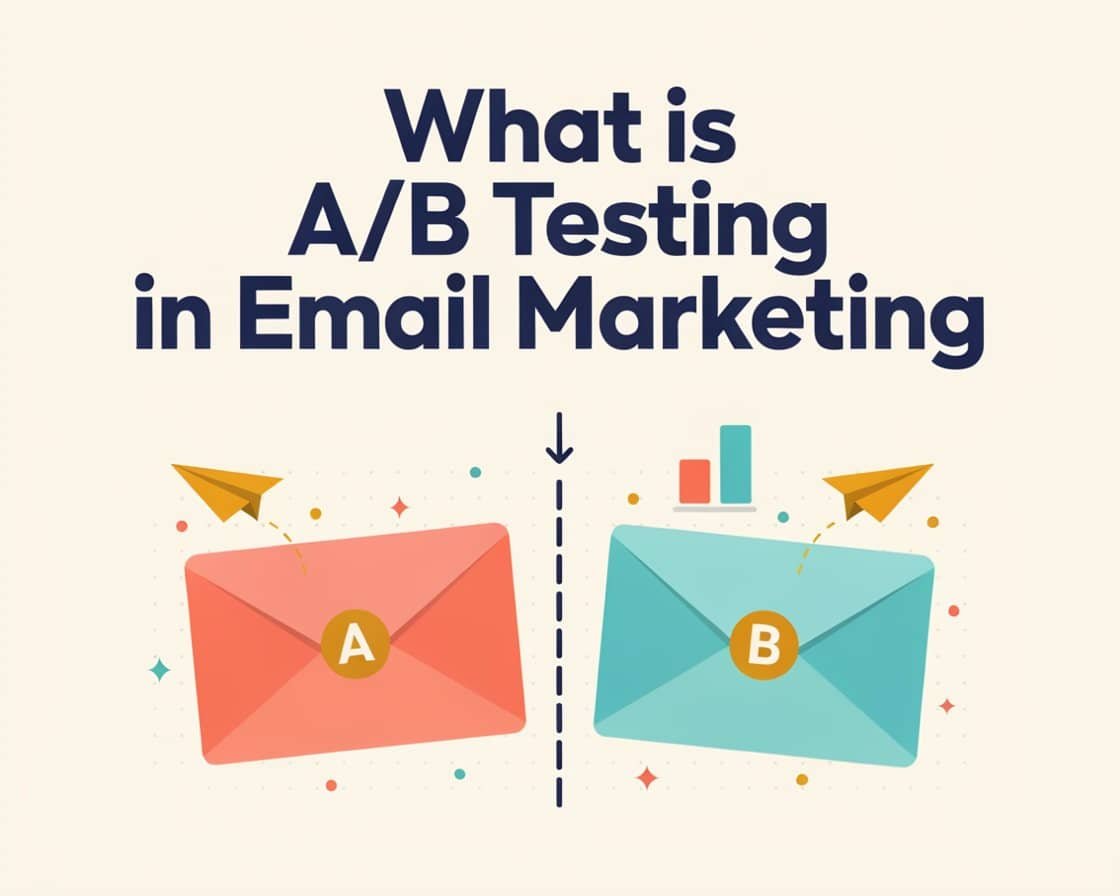
What is A/B Testing in Email Marketing? A Complete Guide
Quick Takeaway: A/B testing (split testing) sends two versions of an email to separate audience segments to find out which one performs better, helping you make data-backed decisions instead of guesses.
A/B testing in email marketing is a controlled experiment that compares two versions of an email to determine which produces better results. You send Version A and Version B to comparable, randomized audience segments, then use a preselected metric—such as clicks, replies, or conversions to choose the winner.
Understanding A/B Testing
A/B testing, also called split testing, is one of the most effective strategies in email marketing. Two versions of an email — Version A and Version B- are sent to separate, randomly selected groups from your subscriber list to see which one drives better results. Each version differs by exactly one variable, which could be the subject line, email design, call-to-action (CTA) placement, images, or even the send time.
The value of A/B testing lies in its ability to reveal exactly how your audience prefers to be communicated with — removing guesswork from your campaigns and replacing it with real performance data, which compounds over time into stronger engagement and higher ROI.
Benefits of A/B Testing for LeadsMunch Campaigns
Grows your qualified lead base — knowing which email version resonates lets you refine future sends so more of your outreach converts leads into pipeline, not just opens.
Sharper engagement — sending the version your audience actually prefers means fewer unsubscribes and more replies, which matters directly for a lead-gen platform where reply rate is the metric that counts.
Higher conversion rate — pinpointing the trigger that moves your audience from “read” to “click” to “book a call” compounds across every campaign you run afterward.
Saves budget and time — instead of guessing and mass-blasting an underperforming email to your whole list, you test on a slice first and protect the rest of your send reputation.
Better open and click-through rates — testing surfaces the patterns (tone, urgency, personalization) your specific lead segments respond to, so future emails start from a stronger baseline.
Key Parameters to Test
1. Subject lines — the first (and sometimes only) thing a lead sees. Test length, tone, personalization tokens (first name, company name), and urgency framing.
2. Content and layout — single-column vs multi-column, short punchy copy vs longer value-led copy, and how much social proof or case-study data you lead with.
3. Call-to-action (CTA) — wording, color, and placement matter more than most marketers expect. Swapping “Book a Demo” for “See Your Custom Lead List” can shift click behavior meaningfully.
4. Send time — LeadsMunch audiences (often B2B decision-makers) behave differently across days and time zones; testing send windows finds when your specific list is actually paying attention.
Best Practices
- Set a clear objective first — decide upfront whether you’re optimizing for opens, clicks, or booked calls.
- Test one variable at a time — isolate the change so you know exactly what drove the result.
- Use a large enough sample — small segments produce noisy, unreliable winners.
- Act on the data — feed the winning pattern into your next campaign rather than treating each test as a one-off.
Common Challenges
| Challenge | Description |
|---|---|
| Segmentation complexity | Lead lists with varied industries or roles can react very differently, muddying results |
| Timing sensitivity | Holidays, fiscal quarter-ends, or industry events can skew short test windows |
| Short-term vs long-term signal | A high open rate today doesn’t guarantee retention or long-term deliverability |
| External noise | Competitor campaigns or market news can shift how your leads respond, independent of your test |
Conclusion
For a lead-generation platform like LeadsMunch, A/B testing isn’t optional polish — it’s the mechanism that turns a static email list into a continuously improving acquisition channel. Every test result becomes an input for the next campaign, compounding into stronger open rates, better click-throughs, and more leads converted into real conversations.