
No products in the cart.
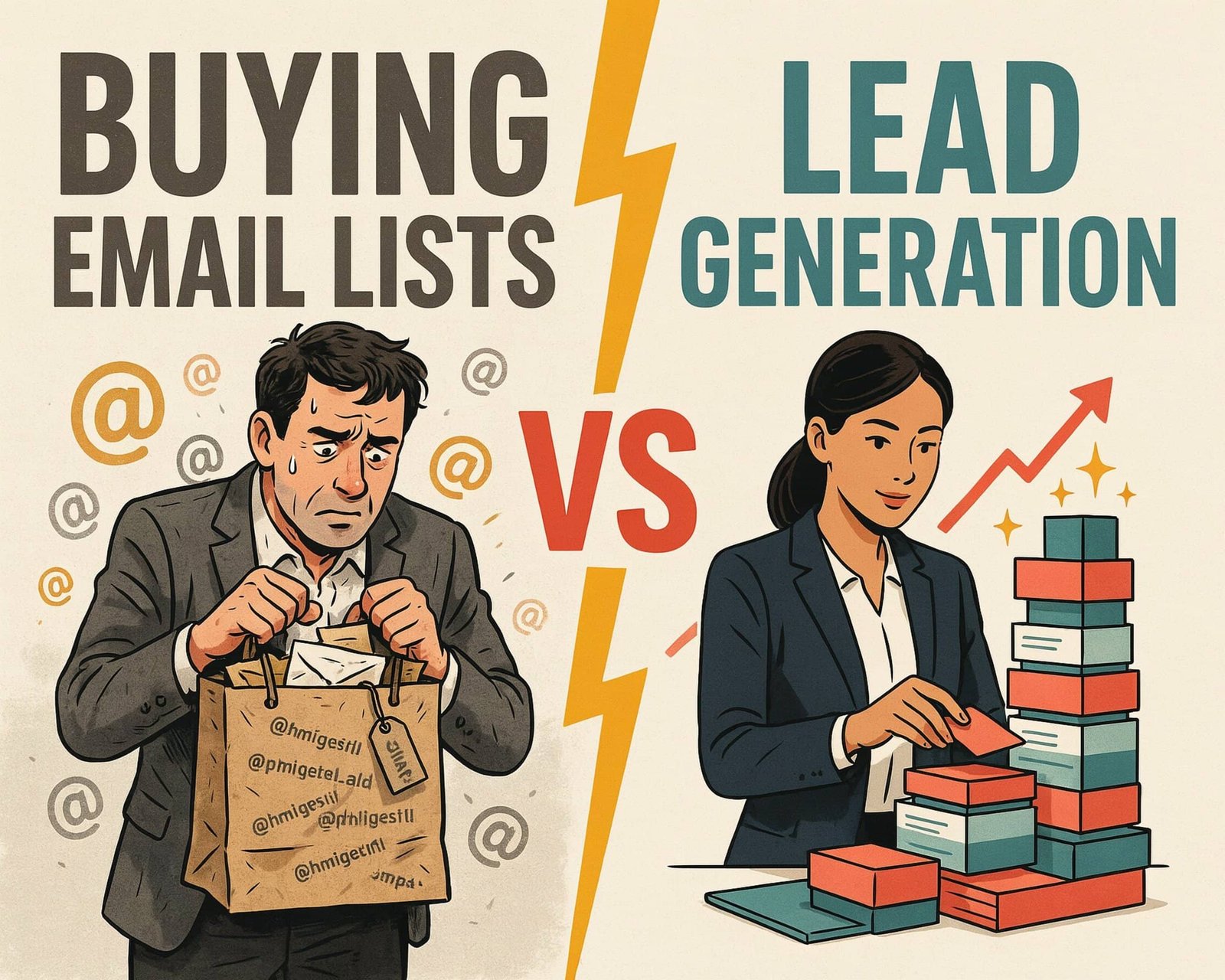
Buying Email Lists vs Lead Generation: See Whats Best
Buying email lists wins on speed, and lead generation wins on long-term quality, so the smartest move for most B2B teams in 2026 is to pair a verified email list with an ongoing lead-generation plan instead of picking only one path.
Key takeaway: A purchased list gets a campaign sending within hours and costs far less per contact, but the data ages fast and carries real legal risk in the EU and Canada. Lead generation costs more per lead and takes longer to build, but it earns trust and protects your sender reputation over time.
At a Glance: Buying Email Lists vs Lead Generation
| Factor | Buying Email Lists | Lead Generation |
|---|---|---|
| Time to first send | Hours to a day or two | Weeks to several months |
| Cost per contact | Low, often $0.01 to $0.50 per record in bulk | Higher, roughly $150 to $300+ per qualified B2B lead through cold outreach, more through paid channels |
| Data freshness | Decays roughly 22% to 30% per year if not refreshed | Built from current activity, so it starts fresh |
| Legal risk | Low under US CAN-SPAM, much higher under GDPR and CASL without consent | Generally lower, since contacts engage first |
| Personalization | Limited unless the list is enriched | High, based on real interest or behavior |
| Best for | Fast outreach, market testing, conference follow-up, account-based seed lists | Long-term pipeline, brand trust, and products that need education before a sale |
What Does Buying Email Lists Actually Mean?
When people talk about buying email lists vs lead generation, they’re really asking whether to pay for a ready-made set of contacts or to earn contacts over time through marketing and outreach. A purchased email list is a database of names, job titles, company details, and email addresses that a data provider has already gathered, cleaned, and organized by industry, location, or role. You pay once, download the file, and start emailing the same day.
This is different from scraping irrelevant email addresses off the internet. Reputable providers like LeadsMunch sort their data into a targeted B2B contact database segmented by factors like company size, country, and job title, so a sales team selling HR software can buy a list of HR decision-makers rather than a random pile of addresses. LeadsMunch, for example, organizes its records this way, which is why a marketing directors email list or a CEO email list can be pulled by job title alone in minutes.
The appeal is obvious: no waiting, no content calendar, no months of SEO work. You buy, you send, you see replies within days. The catch is that the list reflects a snapshot in time. People change jobs, companies merge, and email addresses go dead. That’s why high quality B2B email data depends on how often a provider refreshes its records, not just how big the list is on day one.
What Is Lead Generation, Exactly?
Lead generation is the process of attracting and qualifying people who show interest in what you sell, rather than buying their contact information outright. It covers a wide range of B2B lead generation strategies: content marketing, SEO, paid ads, referrals, events, LinkedIn outreach, and cold calling. The common thread is that the prospect takes some action, downloading a guide, filling out a form, replying to a cold email- before they become part of your pipeline.
Not every contact you generate counts as a real opportunity, which is why teams sort leads into stages. A simple breakdown of what counts as a sales lead helps separate someone who just visited your pricing page from someone who actually wants a call. The same logic applies to the difference between warm leads vs cold leads: warm leads already know your brand, while cold leads need a reason to pay attention before they’ll respond.
A structured lead generation process usually has four parts: attracting attention, capturing contact details, qualifying interest, and handing the lead to sales. Done well, this builds a pipeline of people who already trust your brand a little, which tends to convert better than a cold list, but it almost always takes longer to get moving.
Email Lists vs Lead Generation: Feature-by-Feature Comparison
Here’s where the email lists vs lead generation comparison gets concrete. Each method wins on different criteria, and the right pick depends on what your business needs right now.
| Feature | Buying Email Lists | Lead Generation |
|---|---|---|
| Setup time | Same day | Weeks to months, depending on the channel |
| Upfront cost | Low (often under $100 for a niche list) | Variable, can be near-zero for SEO content or several hundred dollars per lead for paid channels |
| Ongoing cost | List refreshes every few months | Continuous content, ad spend, or SDR time |
| Targeting precision | High if segmented by industry, title, and location | High, but built gradually around an ideal customer profile |
| Verification needed | Yes, lists should be checked before a big send | Less critical, since contacts opt in themselves |
| Compliance complexity | Higher outside the US (GDPR, CASL) | Lower, since consent is usually built into the process |
| Conversion behavior | Lower reply rates on cold sends, larger volume | Higher conversion per contact, smaller volume |
| Scalability | Instant — buy more records anytime | Scales with content output, ad budget, or team size |
| Best company stage | Startups, agencies, or anyone testing a new market fast | Companies investing in brand and repeat revenue |
Should I Buy Email Lists? The Real Risks to Know
It depends on where you buy from and which rules apply to you. Email list buying risks are real, but they are manageable if you know what to check before spending money.
The biggest risk is data quality.
B2B contact data decays over time, so a list that was accurate six months ago may already contain many dead addresses.
High bounce rates from old or unverified leads can hurt your sender reputation and push future emails into spam.
The reason this happens is simple: people change jobs, companies rebrand, and email domains change. That means even a “good” list can become outdated quickly if it is not refreshed and verified.
The second risk is legal.
In the United States, buying email lists is not banned, and opt-in consent is not always required before sending a commercial email.
US email rules still require a working unsubscribe link, a real physical address, and honest subject lines.
Outside the US, rules are often stricter, especially in the EU and Canada, where consent is usually required.
This is why verified email lists for outreach should always come with clear documentation about how the data was collected. If a provider cannot explain consent and collection methods, the list is much riskier to use.
The third risk is reputation.
Cold emailing a purchased list with generic, salesy copy can look like spam even when it is technically allowed.
The best protection is to warm up your sending domain, personalize the message, segment tightly, and verify the list before sending.
Is Lead Generation Better Than Purchased Lists? What the Data Shows
Lead generation isn’t automatically “better”; it’s better at different things. Recent benchmark data puts the blended cost of a B2B lead around $150 to $300 through cold outreach channels and well over $400 through paid search or trade shows, while inbound methods like SEO and content marketing can cost roughly 60% less per lead once they’re up and running, though they typically take six to twelve months to build momentum. Conversion data tells a similar story: cold outbound tends to close at a noticeably lower rate than warm, inbound-sourced leads, even though outbound can move faster and often lands larger deal sizes for smaller companies.
So the honest comparison looks like this: purchased lists are cheap per contact but expensive in wasted sends and compliance overhead if the data is stale. Lead generation costs more per lead but converts at a higher rate and builds an asset, your audience, your content, your brand reputation, that keeps paying off after the campaign ends. If your product needs a single cold email to land a meeting, a list wins on cost. If your product needs trust before anyone will buy, lead generation usually wins on results.
The Best Way to Generate B2B Leads Without Buying a List
If you want to build sales leads without buying lists, a few outbound lead generation best practices consistently outperform generic spray-and-pray tactics:
- Publish content that answers the exact questions your buyers search for, so search engines and AI answer tools start citing your site as a source.
- Use LinkedIn to engage with prospects before pitching anything — comments and shares build familiarity faster than a cold DM.
- Run small, highly targeted outbound campaigns to a narrow ideal customer profile rather than blasting a huge, generic list.
- Ask current customers for referrals; referral leads convert at some of the highest rates of any channel.
- Host a short webinar or live demo around a specific problem your audience already has.
- Offer a free tool, template, or calculator that naturally captures an email address in exchange for value.
These methods take longer to produce results than buying a list, but they create leads who already trust you a bit, which usually means fewer objections and shorter sales cycles. A LinkedIn lead generation service or guidance on local leads generation can speed up the early stages if your team is small and stretched thin.
When Does Buying a Verified Email List Actually Makes Sense?
Lead generation for email marketing isn’t always the right starting point, especially when time is the scarcest resource. Buying a list makes sense in a handful of clear situations:
You’re entering a brand-new market or country and don’t yet have an audience there. A USA business email list or Europe email list gives you a starting point instead of months of cold-start content work. You’re running an account-based campaign and already know exactly which companies and job titles you want to reach, such as a CXO email list for a high-ticket enterprise pitch. You need to follow up with attendees after a trade show or conference, and want to supplement your own contact list with a verified, niche dataset. You’re a small agency or consultancy that needs a fast way to test a new offer before investing in a long-term content strategy.
In each of these cases, the goal isn’t to replace lead generation; it’s to buy time while your organic pipeline is still warming up.
Why LeadsMunch Is a Smart Choice for Buying Email Lists?
If you decide buying a list is the right move, the provider you choose matters more than almost anything else in this whole comparison. LeadsMunch has built its catalog around the exact problems described above: stale data, poor segmentation, and compliance gaps.
A few things stand out about how LeadsMunch approaches verified B2B email data. Records are organized into thousands of niche categories by industry, job title, company size, and country, so you can pull something as specific as a staffing and recruiting email list, an accounting firm’s email list, a dental clinic’s email list, or a SaaS companies email list instead of one generic file. Coverage spans more than 200 countries, which matters if you’re expanding internationally and need something like a Canada real estate agents email list for a specific regional push.
LeadsMunch also positions its data as permission-based and aligned with GDPR and CAN-SPAM rules, with records refreshed on a regular cycle rather than sold once and forgotten, and most lists are priced affordably enough that small businesses and solo founders can test a niche without a big upfront commitment. Beyond ready-made files, the company also offers custom list building, data verification, and data enrichment services for teams that already have a partial database and just need it cleaned, appended, or expanded. If you’re comparing providers, it’s worth seeing how LeadsMunch compares to ZoomInfo on pricing and contract flexibility, a common sticking point for smaller teams that don’t want an annual enterprise contract just to test outbound.
None of this replaces good judgment on your end. Always request a sample before a large purchase, check a handful of records by hand, and confirm refund terms before you commit a bigger budget; that diligence is true no matter which provider you choose, LeadsMunch included.
The Hybrid Strategy: Combining Email Lists and Lead Generation
The most data-driven lead generation strategy for 2026 usually isn’t “buy or build”; it’s both, sequenced correctly. A common pattern looks like this: use a purchased, verified contact database to fill the top of the funnel and start conversations immediately, while simultaneously investing in content, SEO, and referral programs that take longer to mature but cost less per lead once they’re running.
This hybrid approach also solves the warm leads vs cold leads problem directly. Purchased lists give you cold leads at scale, fast. Inbound content and referrals give you warm leads that already trust you, just more slowly. Running both at once means your sales team always has something in the pipeline, even during the months before your organic lead generation for B2B fully kicks in. Many SaaS and agency teams run this exact mix: outbound to a segmented list for immediate meetings, inbound content for the deals that close six months down the line.
Email Lists vs Lead Generation for Small Businesses
Lead generation for small businesses comes with a tighter budget and less patience for a six-month content runway, which usually tips the scales toward buying a list first. A founder selling to local businesses might start with a USA companies email database filtered down to their exact city or industry, run a short, well-personalized campaign, and use early replies to fund a slower-building content or referral engine.
Bigger companies with more budget and a longer sales cycle can usually afford to invest more heavily in organic lead generation from the start, since they have the runway to wait for SEO and brand content to compound. Small businesses rarely have that luxury, which is exactly why an affordable, segmented list is often the more practical first step rather than a shortcut to avoid.
How to Choose: A Quick Decision Framework
A simple way to settle the buying email lists vs lead generation comparison for your own business is to ask three questions. First, how fast do you need the pipeline, days, or are you comfortable waiting months? Second, what’s your budget per contact versus per qualified lead, and can you absorb a higher cost now for a better long-term return later? Third, which regions are you emailing, since GDPR and CASL countries carry far more compliance weight for purchased lists than the US does under CAN-SPAM?
If speed and budget matter most and you’re targeting the US or a similarly permissive market, start with a verified, segmented list and layer in lead generation as you grow. If trust, long sales cycles, and international compliance matter most, invest in lead generation first and treat a purchased list as a supplement rather than the foundation.
FAQs about Buying Email Lists vs Lead Generation
Should I buy email lists?
- Yes, you should buy email lists if you choose a verified, segmented provider like LeadsMunch and you’re targeting a region like the US, where CAN-SPAM allows purchased lists. Buying a list is a fast, low-cost way to start outbound campaigns without waiting months for inbound traffic. Just verify the data, personalize your messaging, and warm up your sending domain first. Skip it if you’re emailing GDPR or CASL countries without documented consent, since the legal risk there is much higher than the upside.
Is lead generation better than purchased lists?
- It depends on your timeline. Lead generation converts at a higher rate and builds a long-term audience, while purchased lists are faster and cheaper to start with. Lead generation tends to win on quality and trust over months; purchased lists tend to win on speed and cost in the short term. Most growing B2B companies use both, leaning on a list for immediate pipeline while lead generation efforts mature in the background.
Is it legal to buy email lists?
- Yes, in the United States, under the CAN-SPAM Act, which regulates how you send email, rather than where the addresses came from. You still need an unsubscribe link, your real address, and honest subject lines in every message. It gets more complicated in the EU and Canada, where GDPR and CASL generally require prior consent before a marketing email is sent, so a cold-purchased list is far riskier to use there without documented opt-in.
What is the difference between buying email lists and lead generation?
- Buying email lists means paying for a pre-built database of contacts that match your target audience, ready to email immediately. Lead generation means attracting and qualifying contacts through content, ads, referrals, or outreach until they show genuine interest. One is a transaction, the other is a process. Buying is faster and cheaper upfront; lead generation is slower but usually produces warmer, higher-converting contacts over time.
How much does a B2B email list cost?
- A b2b email list pricing varies by niche, country, and list size, but small or niche segments often start under $100, while larger or international datasets can run into the hundreds of dollars. Providers like LeadsMunch price many ready-made lists affordably enough for solo founders and small teams to test a niche under $49. Custom-built lists targeting very specific job titles or industries usually cost more than broad, general lists.
How much does B2B lead generation cost per lead?
- Recent benchmarks put blended B2B cost per lead somewhere between $150 and $300 through cold outreach, with paid channels like trade shows or search ads often running $400 to $800 or more. Organic channels like SEO and content cost less per lead long-term but take six to twelve months to build momentum. The right number depends heavily on your industry, deal size, and how competitive your keywords or ad space are.
What is the biggest risk of buying email lists?
- Stale data is the most common risk; B2B contact information decays by roughly 22% to 30% a year, so an unverified list can be full of dead emails within months. The second biggest risk is compliance, especially outside the US, where consent laws like GDPR and CASL make cold-purchased lists much harder to use legally. Always verify a list and check the provider’s compliance claims before a large send.
Can I use a purchased email list with my normal email marketing software?
- Often not directly. Most mainstream email service providers restrict or ban sending cold campaigns to purchased lists, since it raises spam complaints and risks their shared sending infrastructure. You’ll usually need a dedicated cold outreach tool or your own warmed-up domain instead. Some providers, including LeadsMunch, sell lists formatted to be CRM-friendly, which helps with organizing contacts even if you still need a separate outreach infrastructure to send safely.
How often should I refresh a purchased email list?
- Every three to six months is a reasonable standard, since people change jobs and companies restructure constantly. Refreshing keeps your deliverability high and your bounce rate low, which protects your sender reputation for every future campaign. Many providers, including LeadsMunch, update their databases on a regular cycle, but it’s still smart to re-verify a list yourself before any campaign that matters.
What is the best alternative to buying email lists?
- The best alternative to buying email lists is organic and outbound lead generation, content marketing, SEO, referrals, and personalized outreach to a narrow ideal customer profile. This is the main alternative, though it takes longer to produce volume. A hybrid approach works well for most teams: use a verified list to generate pipeline now, while building lead generation channels that lower your cost per lead over the following months.
Do purchased email lists hurt sender reputation?
- They can, but usually only when the list is unverified, poorly targeted, or emailed without warming up the domain first. A clean, verified, well-segmented list emailed with personalized, relevant messaging carries far less risk than a cheap, unverified list blasted with generic copy. Bounce rates and spam complaints are the two metrics that matter most, so check both closely after any send.
What’s the difference between cold outreach with purchased lists and inbound lead generation?
- Cold outreach with purchased lists reaches people who haven’t engaged with your brand yet, so it requires stronger personalization to earn a reply. Inbound lead generation reaches people who have already found you through search, content, or referrals, so they typically convert at a higher rate. Outreach scales faster since you control the volume; inbound scales slower but usually costs less per lead once it’s established.
Is LeadsMunch a good place to buy email lists?
- LeadsMunch is a solid option for teams that want segmented, niche-targeted B2B and B2C lists across more than 200 countries, with pricing accessible enough for small businesses to test a market. The catalog covers industries from healthcare to real estate to SaaS, and it also offers custom list building and data verification services. As with any provider, request a sample and confirm refund terms before a large purchase.
Are verified email lists actually verified?
- Verification quality varies a lot between providers, so it’s worth asking exactly how a list was checked: real-time verification, manual review, or a one-time pass months ago. A genuinely verified list should have a documented accuracy rate, recent update timestamps, and ideally a sample you can test before buying in bulk. Treat any provider that won’t share their verification method or offer a sample with caution.
Can small businesses benefit from buying email lists?
- Yes, often more than larger companies, since small businesses usually can’t afford to wait six to twelve months for inbound lead generation to mature. A tightly segmented, affordable list lets a small team start outbound campaigns immediately and reinvest early revenue into longer-term content or referral programs. The key is starting narrow — a specific city, industry, or job title, rather than buying a huge, generic list.
What is a B2B contact database, and how is it different from a lead list?
- A B2B contact database is a broad collection of business contacts organized by firmographic data like industry, location, and job title, meant to be filtered down for outreach. A lead list is typically a narrower, more qualified subset of people who’ve shown some interest or fit a specific campaign’s targeting. In practice, you often build a lead list by filtering a larger contact database down to your exact ideal customer profile.
How do I generate qualified leads without buying a list?
- You can generate qualified leads by focusing on content that answers real buyer questions, building relationships on LinkedIn before pitching, asking happy customers for referrals, and running small, highly targeted outbound campaigns rather than generic blasts. These methods take longer than buying a list, but tend to produce leads who already trust your brand somewhat. Combining two or three of these channels usually works better than relying on just one.
Should startups buy email lists or build lead generation from scratch?
- 80% of small businesses rely on email marketing. Most early-stage startups benefit from buying a small, targeted list first, since it validates messaging and gets real feedback faster than waiting for organic traffic to build. Once a startup has product-market fit and some revenue, reinvesting in lead generation channels like content and referrals usually lowers cost per lead over time. Treat the purchased list as a fast feedback loop, not a permanent strategy.
What’s better for cold outreach: buying a list or scraping leads myself?
- Buying from a reputable provider like LeadsMunch is usually faster and more reliable, since scraping requires technical setup, ongoing maintenance, and carries its own data accuracy and compliance risks. A purchased list from a provider that documents its sourcing and verification process saves time and generally produces cleaner data than a DIY scraper built quickly. Scraping can make sense if you need a very unusual, hyper-specific targeting criterion that no provider sells off the shelf.
Can I combine buying email lists with organic lead generation?
- Yes, and for most B2B companies, this is the most practical approach. Use a verified, segmented list to generate pipeline and revenue right away, while investing some of that early traction into content, SEO, and referral programs that lower your cost per lead over the following months. Over time, the share of leads coming from organic lead generation typically grows as the purchased list becomes a smaller piece of the overall mix.
Final Words
There’s no universal winner in the buying email lists vs lead generation comparison; there’s only the right tool for your timeline, budget, and risk tolerance. Buying a verified, segmented list is the faster, cheaper way to start outbound campaigns, especially for US-based outreach and small businesses that can’t wait months for organic traction. Lead generation costs more per lead and takes longer to build, but it converts better and protects your brand over the long run. The teams that grow fastest in 2026 generally don’t choose one over the other; they buy smart, verify everything, and build lead generation alongside it from day one.

3 Comments