
No products in the cart.
What is Lead Nurturing in Email Marketing?
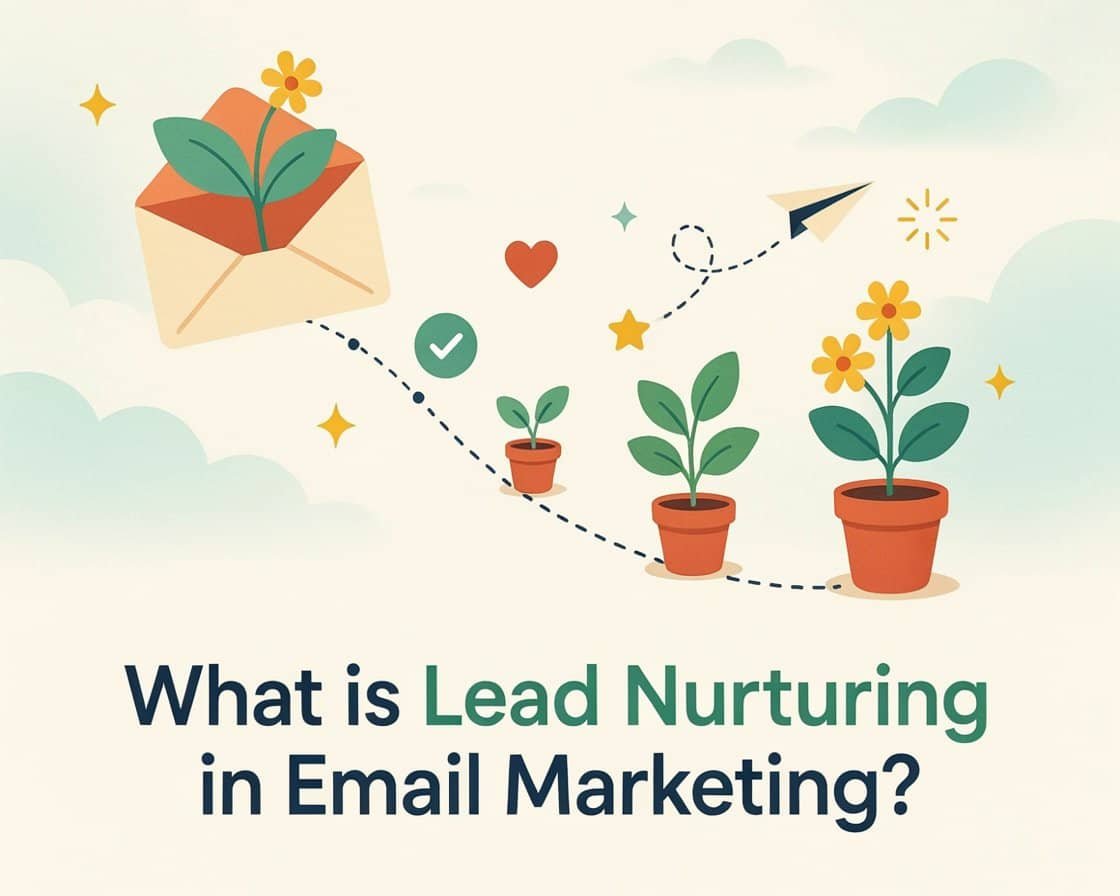
Lead nurturing means staying in touch with people who’ve shown interest in your business, and slowly building a relationship with them through helpful, relevant, and valuable emails, until they’re ready to buy. It’s not about pushing a sale on day one. It’s about earning trust first.
Most people don’t buy the moment they discover a business. They compare options, read reviews, and think it over. Lead nurturing is what happens in that in-between stage: the emails, tips, and updates that keep your business on someone’s radar until they’re ready to make a decision. Done well, it means your brand is the one they remember when that moment finally arrives.
Why Lead Nurturing Matters?
Lead nurturing is the process of building relationships with prospects at every stage of the sales funnel. It matters because it turns unready prospects into qualified sales, helps you stand out from competitors, and maximizes your marketing budget by driving higher revenue per sale.
Why is Lead Nurturing Essential?
- Boosts Conversion Rates: Most initial leads aren’t ready to buy immediately. Nurturing bridges this gap, allowing you to generate 50% more sales-ready leads at a lower cost compared to cold outreach.
- Increases Order Value: Customers who have been nurtured properly make purchases that are 47% larger than those of non-nurtured prospects.
- Keeps Your Brand Top-of-Mind: By providing valuable, educational content, you become the trusted authority they turn to when they are finally ready to make a purchasing decision.
- Lowers Customer Acquisition Cost (CAC): Instead of continuously chasing brand-new prospects, nurturing helps you capitalize on leads already sitting in your CRM.
Key Components of a Successful Strategy
- Marketing Automation: Use automated workflows to send personalized, timely resources based on how the prospect interacts with your brand.
- Audience Segmentation: Group leads by their industry, role, or specific pain points so you aren’t sending generic messaging.
- Lead Scoring: Assign points to leads based on their activity so your sales team knows exactly when a prospect is ready for a direct pitch.
Where Lead Nurturing Happens
Nurturing can happen across a few different channels, but some carry a lot more weight than others.

Email remains the clear leader because it’s direct, personal, and lands right in someone’s inbox rather than getting lost in a busy feed. Your website plays a supporting role by giving leads a place to explore content in more depth, and social media keeps the relationship going in a more casual, ongoing way.
Key Tactics for Lead Nurturing in Email Marketing
1. Segment your list
Not every lead is at the same stage or interested in the same thing. Group your list by interest, behavior, or where someone is in their buying journey, so each email actually feels relevant to the person reading it.
2. Personalize your content
Personalization is more than just using someone’s first name. Use what you know about their past clicks, opens, or purchases to shape what you send next; it’s what makes an email feel written for them instead of blasted to everyone.
3. Create genuinely valuable content
Guides, how-tos, case studies, and webinars all work well here. The goal is to solve a real problem your audience has, which naturally builds trust in your brand as a resource worth paying attention to.
4. Use behavioral triggers
If someone downloads a guide or visits a pricing page, that’s a signal. Set up automatic follow-up emails tied to actions like these, so your nurturing feels timely instead of random.
5. Track performance and keep testing
Keep an eye on open rates, click-through rates, and conversions to see what’s actually working. Testing different subject lines, content formats, and calls-to-action helps you improve results over time.
Best Practices for Lead Nurturing Emails
Lead nurturing emails should prioritize building trust over selling. To maximize engagement, keep your copy concise (50–150 words), focus each email on a single Call-to-Action (CTA), and tailor content to the recipient’s specific stage in the buyer’s journey.
Best Practices for Your Email Campaigns
- Focus on the reader: Shift your language from “we/I” to “you/your”. Address the lead’s specific pain points and offer educational resources before introducing your product.
- Personalize and segment: Use dynamic fields for names and customize content based on how leads entered your funnel (e.g., pricing page view vs. content download).
- Design for mobile: At least 50% of emails are opened on mobile devices. Use responsive templates, clear fonts, and compressed images to ensure fast loading times.
- Refine with A/B testing: Continuously test subject lines, send times, and CTA placements to improve your open and click-through rates.
- Leverage automation: Use CRM software to trigger relevant follow-ups automatically based on user interactions, such as sending a product reminder if a lead leaves items in their cart.
Lead Nurturing vs. Lead Generation
These two terms often get mixed up, but they cover different stages of the process. Lead generation is about finding new prospects in the first place, through ads, content, sign-up forms, or events. Lead nurturing picks up right after that, focused on building trust with the leads you already have until they’re ready to buy.
Think of it this way: generation fills the top of your funnel, and nurturing is what carries leads the rest of the way down it. Skipping nurturing means a lot of hard-earned leads simply go cold before they ever convert.
FAQs about the Lead Nurturing
How long does lead nurturing usually take?
It depends on the buyer and the product. Simple purchases might only need a few emails over a couple of weeks, while bigger B2B decisions can take months of steady, helpful contact before someone’s ready to buy.
How many emails should a nurture sequence include?
There’s no fixed number; what matters more is relevance and timing. Many businesses start with a series of 4 to 8 emails and adjust based on how people respond.
Can lead nurturing be automated?
Yes, and most businesses do exactly that. Email automation tools can send the right message at the right time based on triggers like a download, a click, or time since sign-up, without someone manually managing every send.
Bottom line:
Lead nurturing is about patience, staying in touch with the right message at the right time, until a prospect is ready to become a customer. It won’t happen overnight, but the businesses that do it consistently end up with stronger relationships, better conversion rates, and customers who stick around.

1 Comment